
"third-tier cities"
130 article(s) found

The skill of pressing powder of Italian coffee by raw bean merchants in China Coffee Trading Network
The course of the development of the coffee brand: on January 5, 2011, the first Lido store of Man Coffee in Beijing was officially opened. In February 2011, the Renmin University store in Beijing was officially opened. In September 2011, Beijing Tsinghua Tongyi Store was officially opened. November 2011. Beijing Baiziwan Store officially opened in December 2011. Beijing Wangjing Store officially opened in December 2011. Beijing University of posts and Telecommunications Store officially opened in February 2012.
Coffee consumption in China is about RMB 200 billion-consumption is growing at a rate of 25 per cent a year
Large coffee chains have entered China, such as Starbucks, CAFFE PASCUCCI, Shangdao, Man Coffee and so on. Domestic coffee shops are also on the rise, and coffee shops have been developed in most domestic cities. with the development of various promotions, advertising, public relations and communication activities, the number of coffee consumers is increasing. with the expansion of the region, the coffee consumption taste of consumers is getting higher and higher. Consumption

Desk-top coffee takes the lead in China's second and third tier cities
Cross-Strait Coffee is the leading brand of desktop coffee. (CFP)Ishiya Coffee opens shop in Taipei Minsheng Community. Starbucks, Costa and other American cafes occupy the first-tier cities in the mainland, while Korean cafes are emerging, eating silkworm and whale step by step, while desktop cafes that landed earlier to seize the lead still occupy the three major brands of Shangdao, Diou and Cross-Strait.

Development trend of Korean Coffee Market in China? Basic information of Chinese coffee market?
Professional coffee knowledge exchange more information about coffee beans Please follow the coffee workshop (Wechat official account cafe_style) A large-scale coffee shop expansion is in the pipeline. Seesaw announced last month that it had received 45 million RMB A round investment from Baifu Holdings, which is owned by Hony Capital. The founder of another Shanghai boutique coffee brand, Yingji Coffee, said in a recent interview that it was preparing for 3.

Korean cafes have failed in all aspects of China. What lessons can you learn from Chinese cafes?
Following Kaiping (official Wechat account vdailycom) found that Beautiful Cafe opened a small shop of its own and a large-scale expansion of the cafe was in the pipeline. Seesaw announced last month that it had received 45 million RMB A round investment from Baifu Holdings, which is owned by Hony Capital. The founder of another Shanghai boutique coffee brand, Yingji Coffee, said in a recent interview that it was preparing 30 million yuan.

Espresso the leader of Italian coffee.
Espresso is a well-known chain brand established after the staff of Italian espresso headquarters returned from studying in Italy, headquartered in Beijing. The success / popularity / brilliance of espresso stems from the business philosophy of professionalism, concentration and experts, the appeal of the original cultural essence of Italian coffee and the accurate introduction of the original flavor of espresso and western food. Espresso flag

Korean coffee brands have failed in China. Is there any hope for Chinese coffee brands in the Great Leap forward?
Professional coffee knowledge exchange more coffee bean information Please follow the coffee workshop (Wechat official account cafe_style) when a typical relevant investor is eager to enter the Chinese market, what factors will mess things up? A large-scale cafe expansion is in the pipeline. Seesaw announced last month that it had received 45 million RMB A round investment from Baifu Holdings, a subsidiary of Hony Capital.

Large coffee chains have entered China one after another-domestic coffee shops are also on the rise
1: China's sustained high economic growth, the increasing improvement of people's living standards, the increasing diversity and improvement of the quality of life, and the economic possibility of coffee consumption have directly catalyzed the vigorous development of the coffee industry. 2: the influence of globalization has led to the internationalization of consumption habits, and the number of people drinking specialty coffee is expanding. 3: large coffee chains have entered China.
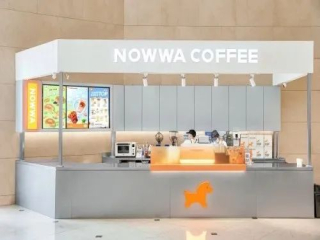
Crazy expansion! 120 stores of Nova Coffee are open.
Professional coffee knowledge exchange more coffee bean information please follow the coffee workshop (Wechat official account cafe_style) more boutique coffee beans please add private Wechat Qianjie Coffee, WeChat: qjcoffeex recently, NOWWA Nova Coffee announced the opening of all 120 stores on Wechat official account, except

It is expected that China's coffee market will maintain a high growth rate in the next five years.
Following Kaiping (official Wechat account vdailycom) found that Beautiful Cafe opened a small shop of its own from 2011 to 2016. China's coffee market grew at a compound annual rate of 13.5%, reaching 14.793 billion yuan in 2016. According to a survey in 12 inland cities, 32% of city dwellers drink coffee. Among them, young men and women, housewives and urban white-collar workers become drinks.

The opportunity of Coffee Market in China-Chinese Coffee joining Market as a whole is developing rapidly
The prospect analysis of domestic coffee joining industry: 1. With the rapid development of China's economy, coffee consumption in Chinese cities is gradually associated with modern life, which leads to the rapid increase of coffee consumption. Coffee joining industry forms a huge consumption potential market.

China's coffee market as a whole is developing rapidly.-Why is China's coffee industry developing so fast?
The prospect analysis of domestic coffee joining industry: 1. With the rapid development of China's economy, coffee consumption in Chinese cities is gradually associated with modern life, which leads to the rapid increase of coffee consumption. Coffee joining industry forms a huge consumption potential market.

The cause of death of the independent cafe
Many people have dreams of opening a cafe, but few dreams come true. Is it just because it's hard to make up your mind to quit and start a new life? This is not the case. In the past two years, cafes have sprung up in second-and third-tier small cities, which shows that many people dare to take this step. However, there are few of these small bamboo shoots that can really grow into talent.
Romantic Coffee unveiled at Sugar and Wine Club Suka Coffee
On March 21, the editor of Sugar and Wine Express visited the Spring Sugar and Wine Fair in Chengdu and was attracted by the romantic Suka Coffee, which is one of the key products to be launched by Singapore Suka International Investment Co., Ltd. It is understood that Suka coffee is a coffee with great personality, romanticism is only one of the series, and there are also classic Blue Mountains.

Cautious Development of boutique Coffee Market Pacific Coffee Brand Brew Bar debuts in Shenzhen
Professional coffee knowledge exchange more coffee bean information please follow the coffee workshop (Wechat official account cafe_style) recently, Pacific Coffee's new boutique coffee space Brew Bar was officially unveiled in Vientiane City, Shenzhen Bay. The brand is also its debut in Shenzhen after the Beijing International Trade Store. As a boutique cafe, the overall design of Brew Bar Shenzhen Bay Vientiane City store

Six principles of Starbucks Cafe location are shared with you.
After selecting the business district, Starbucks will measure the flow of people, determine the main flow lines, select the gathering point, and use the location not far apart as the location of the store. First, layout, and then location I often receive phone calls, the other party said that you hurry to open a shop here, I guarantee that you make money. Gong Ming said that whenever he received such an invitation, his heart was very tangled.

Wait for the introduction of Ta Coffee domestic coffee chain brand
The Beautiful New World Fashion Group is a wholly-owned sub-group of Caihe International Group and so on. Since its inception, the Group has always been committed to establishing a diversified development model in the field of fashion industry. At the same time, through the business model of incubation + operation + management, the group continues to develop in the field of fashion consumption, and successfully explores a unique multi-field and cross-platform development model. Beautiful Pliocene

MY ZONE coffee joined to break the tradition and dominate the market by "characteristics".
If Starbucks in the high-end office complex has established people's first impression of coffee shop business, leisure and petty bourgeoisie. Then on the island, the soft sofa and a variety of economically delicious packages show people another amorous feelings of the coffee shop. In fact, Starbucks and Shangdao are just two versions of coffee shops. With the growing popularity of coffee culture in China, all kinds of special coffee

What will be the impact of Starbucks' full direct operation in the mainland market on the domestic coffee industry?
As for Starbucks' direct operation in the domestic market, the forward-looking Industrial Research Institute believes that the overall impact on the domestic coffee shop industry should be limited. The main reasons include: first, from the perspective of the competition pattern, Starbucks currently accounts for a small proportion of the domestic market and has not formed absolute brand dominance, even if the number of stores will increase significantly in the future (reaching 5000 in 2021).

The increase of national income is expected to increase the per capita consumption of coffee.
The improvement of China's national income level is expected to lead to the increase of coffee consumption per capita. The market penetration of the young and middle-aged population helps to drive the growth of potential coffee consumers. As a drink with unique taste, coffee is very popular among young and middle-aged people. The survey shows that different age groups in China have different degrees of love for coffee, among which people aged 41-50 account for 24% of the total.